CHORÈME
Séverine Morfin explores music that is attentive to nature, porous to the sounds of the world around us, to build a large-scale transdisciplinary project where musical creation and ecology become one. A meeting between strings and soundtracks, a dialogue between art and science, Chorème is the mature work of a virtuoso musician who is open to all kinds of music.
Release 10/11/2025 at the Parc de la Poudrerie
Album release 04/02/2026 at the Théâtre de Vanves
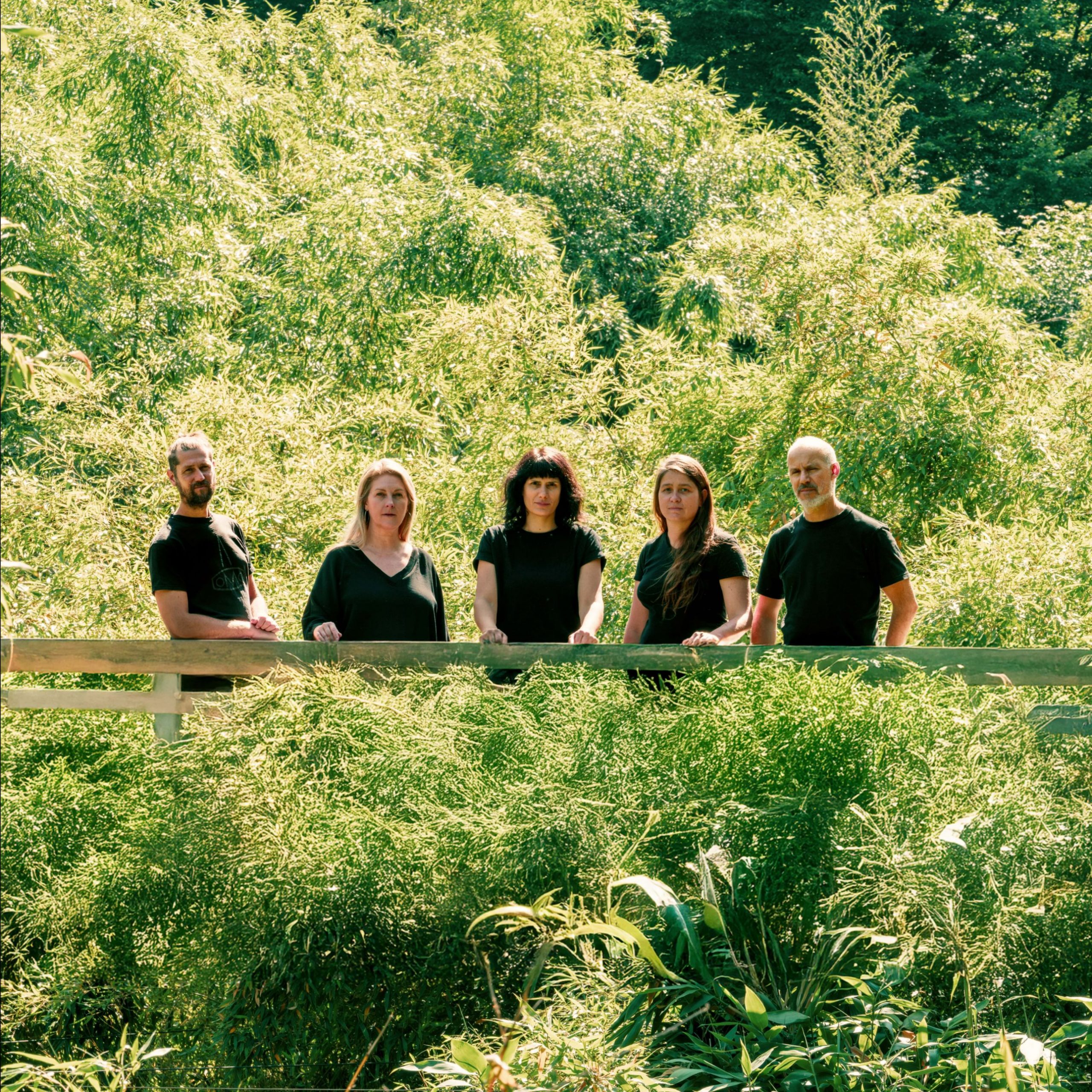
string quartet and tapes
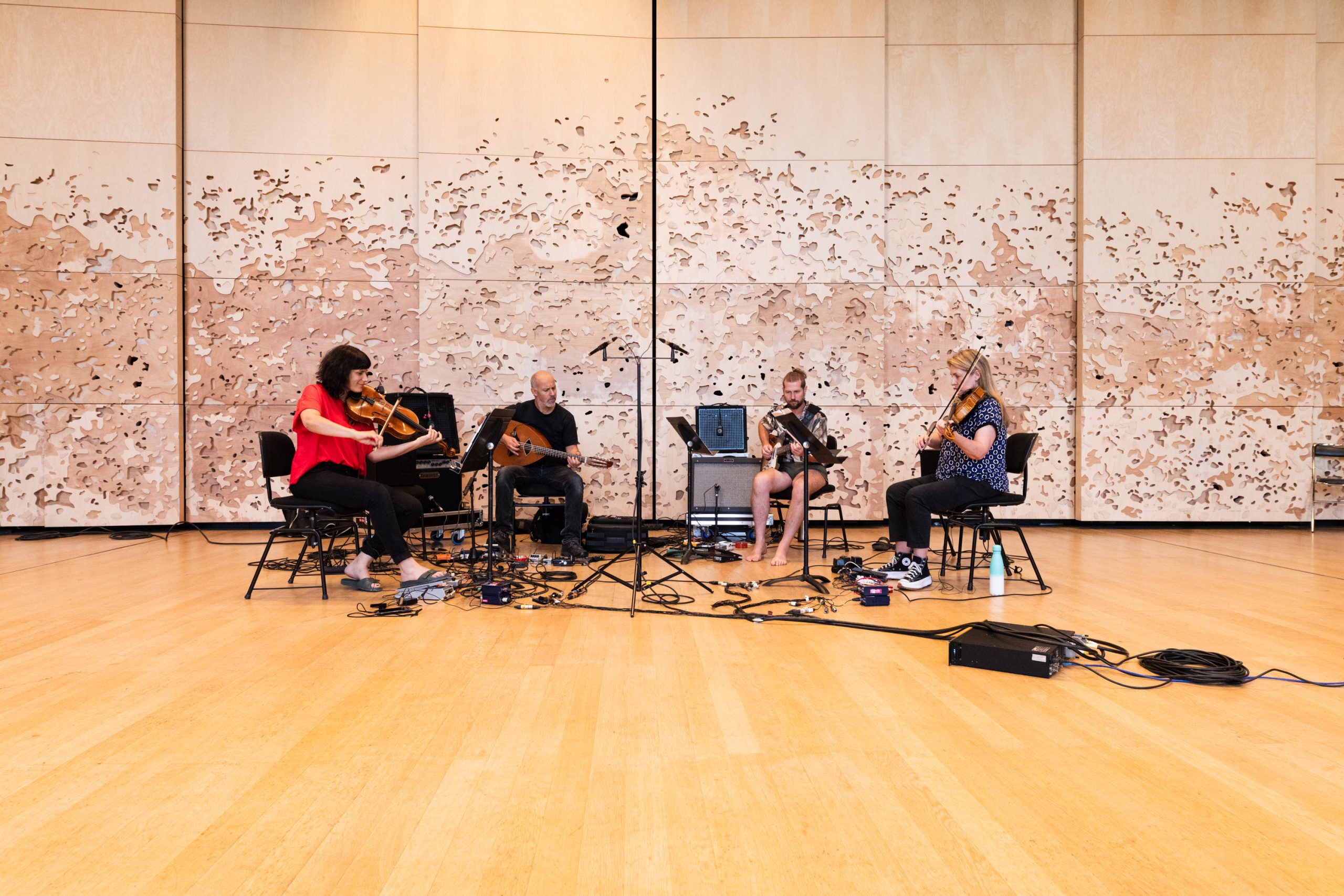
Séverine Morfin Viola, composition
Odile Auboin Viola
Malik Ziad Mandol, guembri
Guillaume Magne Guitars
Céline Grangey Tapes
with
Damien Delorme Philosopher
Yann Tremblay Eco-ethologist
Yann Bagot Plasticist
In partnership with the Ensemble Contemporain, the Parc de la Poudrerie and the Théâtre de Vanves
In Mad Maple (gArden records, 2022), Séverine Morfin, with the collaboration of Céline Grangey, recovered soundtracks recorded in nature (glaciers, forests, wind) from various sound libraries to ‘play’ them in the same way as an instrument with her orchestra. With Chorème, the violist took another step in the same direction, recording the sounds of Parc de la Poudrerie herself, again with Céline Grangey. Located in Sevran, Seine-Saint-Denis, this park is unique in that it is a partially protected site, home to wildlife sheltered from human beings. It was perfect for someone who wanted to explore a territory close to her, connected to her experience as a city dweller.
With microphones in hand, Séverine Morfin and Céline Grangey set out to capture the songs of the birds, fish and bats of Parc de la Poudrerie. This phase of the work was marked by research into the different animal species and recording methods. How can hydrophones be best used to record underwater? How can the spatial distribution of sounds be captured? The sound engineer’s skills come into play here at the root of the project, as the result can be significantly different depending on the recording method used.
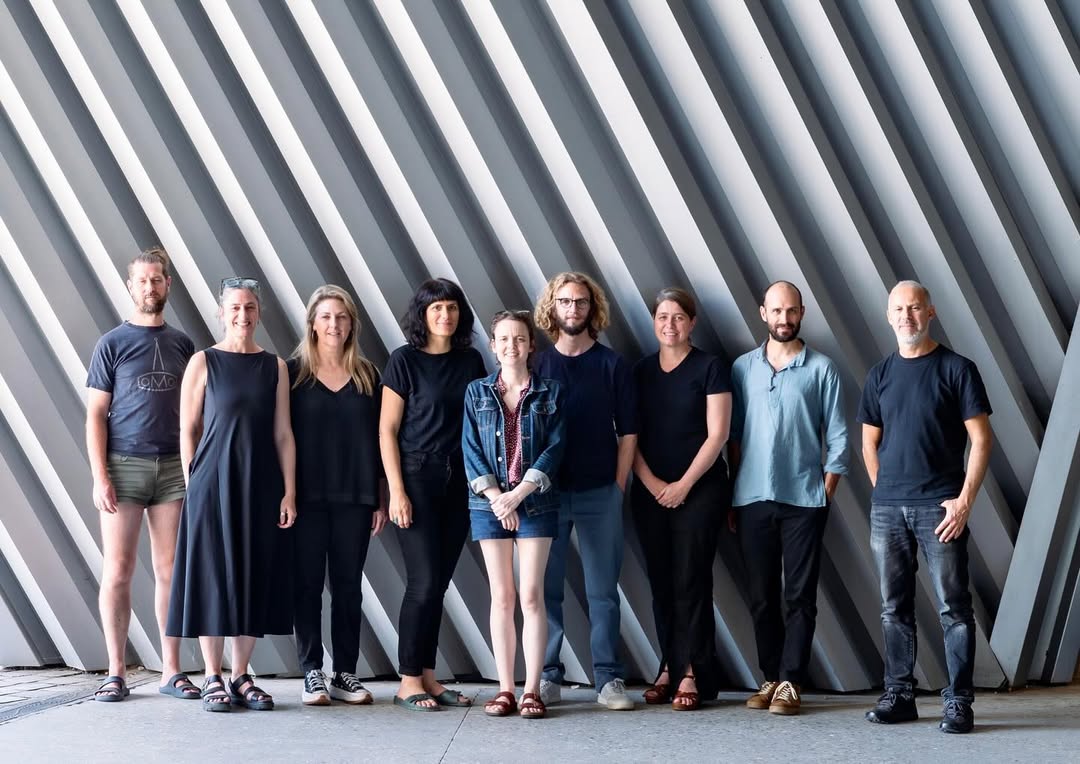
© Alain Delorme
In parallel with this field recording project, Séverine Morfin formed a string quartet with artists she admires, who are worlds unto themselves and who ‘carry within them a vision of music and life’.
Odile Auboin is a violist in the Ensemble Intercontemporain. A lover of creation, she is particularly attracted to living composers (she is playing a piece by Hèctor Parra at the Ircam’s ManiFeste-2025 festival) and has a fondness for unconventional approaches. She also happens to have the same luthier as Séverine Morfin — which creates bonds.
Malik Ziad, a player of the guembri, oud, banjo and mandolin, is a leading figure in Gnawa and Chaâbi music. An inventor of instruments, he has the soul of a researcher. He can also be heard in the Morfin-Ziad duo, which, in a contemporary-mystical-hypnotic-jazz register, completely blows the roof off.
Guillaume Magne, a guitarist who can play just about anything (Le Bal à Momo), has mainly been heard in projects that combine improvised music with a blues/rock flavour. This is hardly surprising, given that he grew up listening to Pink Floyd and Ry Cooder.
Two violas, two ‘guitars’. While this unique instrumentation and virtuoso cast were ‘obvious’ choices for Séverine Morfin, they do present a certain challenge. Malik Ziad cannot read music, Odile Auboin does not improvise… But ultimately, this is nothing but stimulating for someone who is used to moving from one musical world to another.
As for Céline Grangey, who was recording whales in Hawaii in 2024 for another project and who will be teaching the sound recording class at the CNSMDP in 2025-26, Séverine Morfin met her some twenty years ago in the duo… Korème. At that time, they were inaugurating the dialogue between instruments and soundtracks, this time from the violist’s personal archives.
A little-used geographical term, ‘chorème’ refers to the graphic representation of a space. Beyond that, it can evoke whatever one wants, the word ‘heart’ for example, or a group of early music.
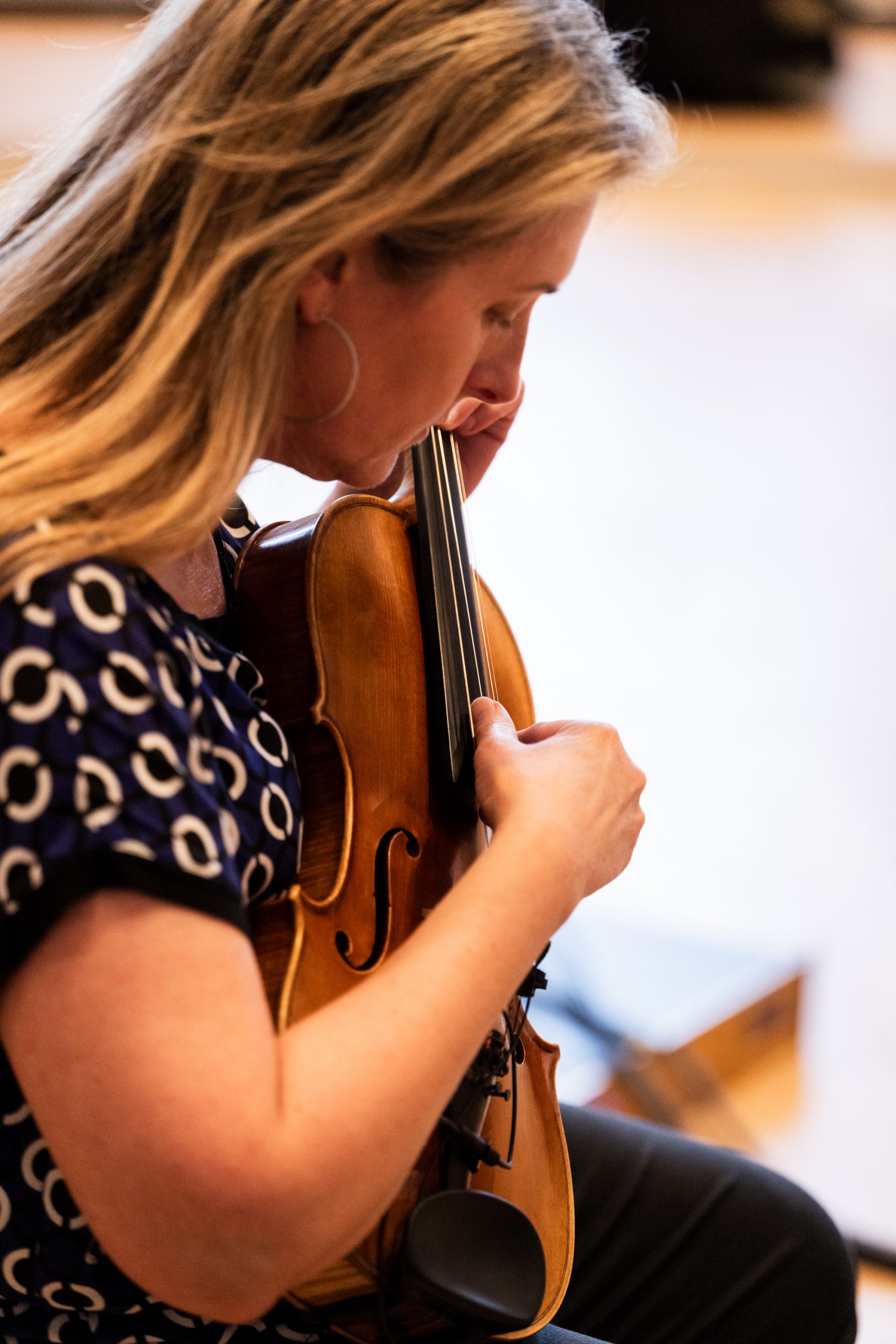
Odile Auboin © Alain Delorme
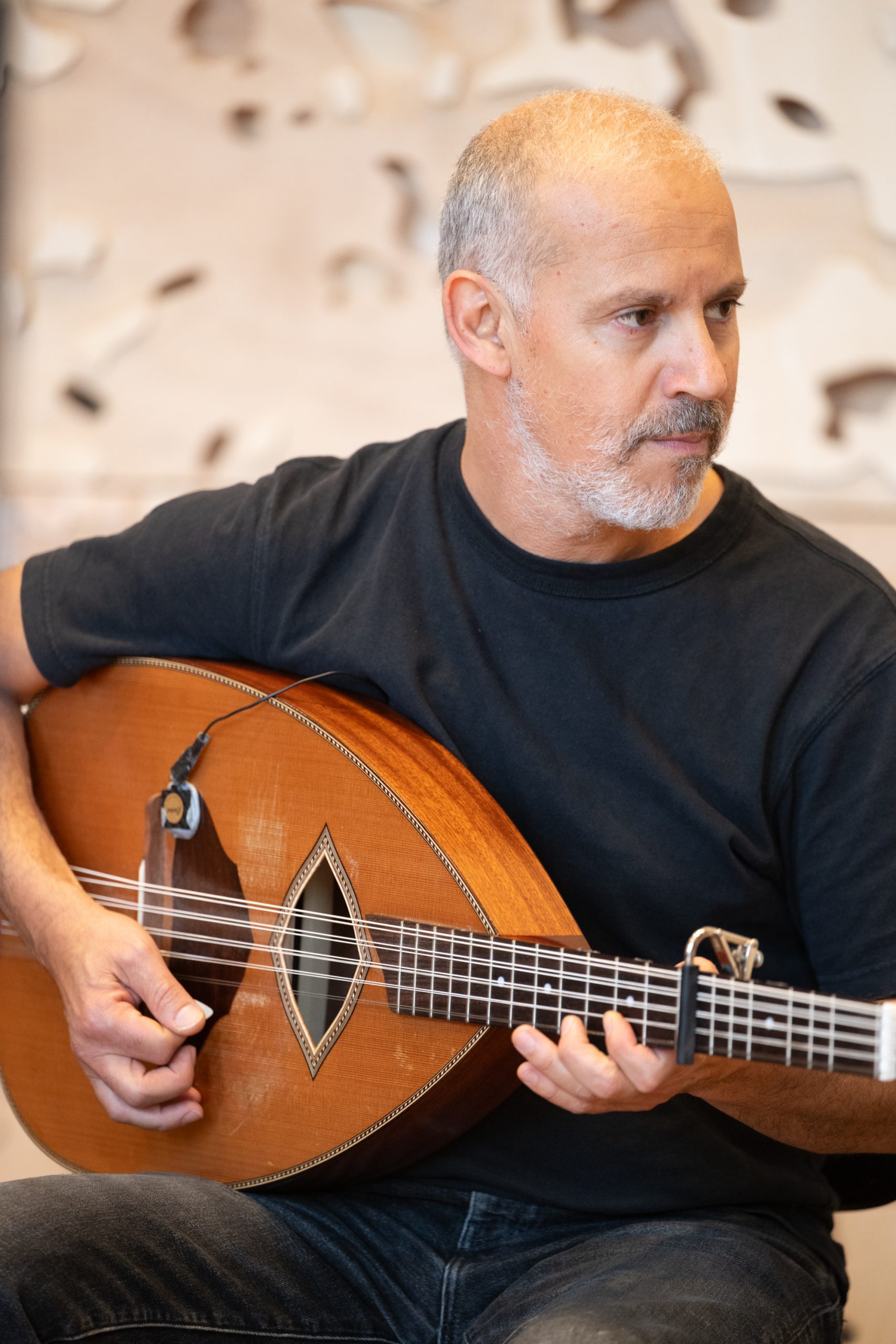
Malik Ziad © Alain Delorme
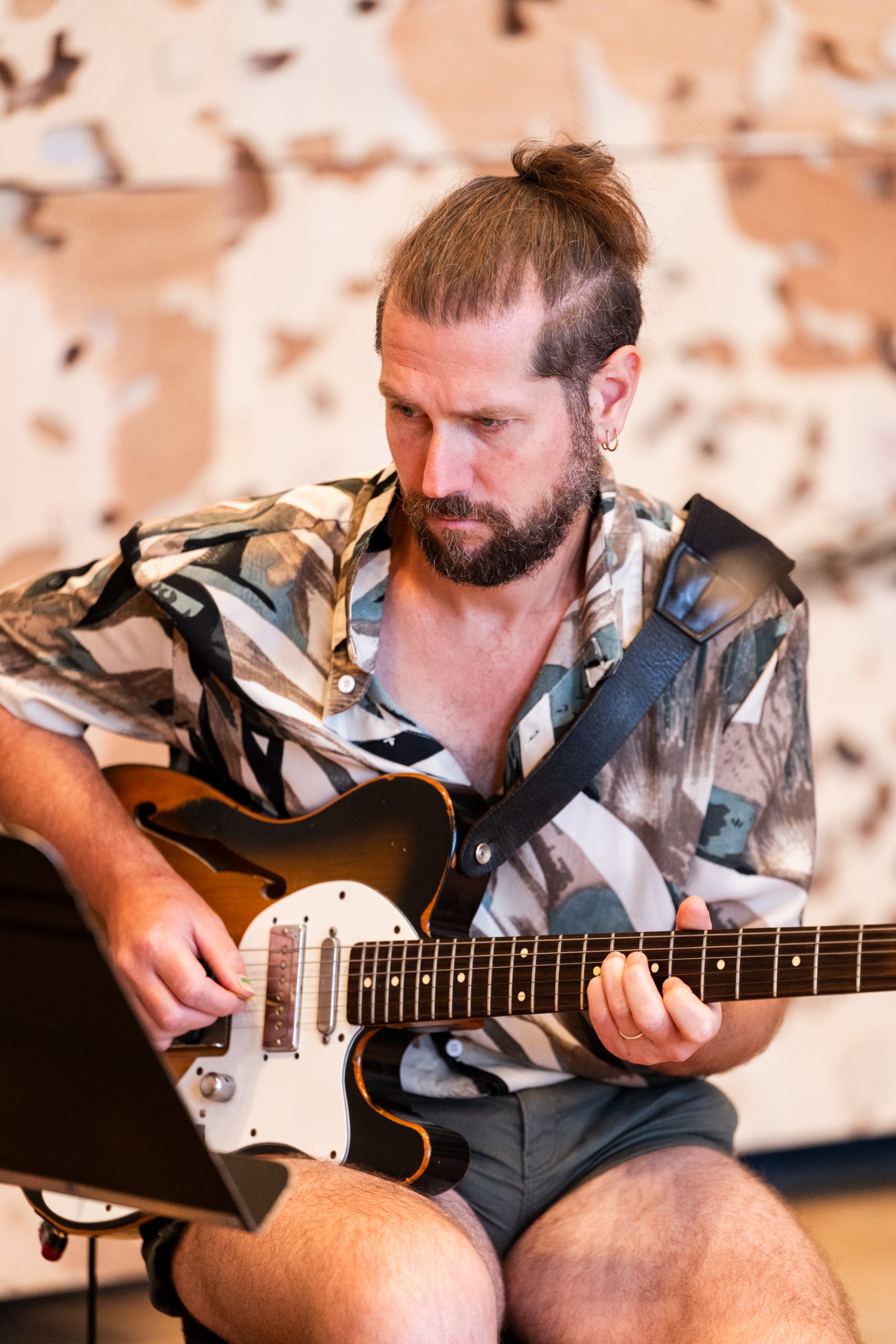
Guillaume Magne © Alain Delorme
This core group is joined by various figures from the worlds of art and research.
Yann Bagot: visual artist, illustrator of natural landscapes in Indian ink, known in the music world for his drawings of jazz concerts, whose visual universe was already an integral part of Mad Maple. For Chorème, he has created a very large format work that is used as part of the scenography, but also has a life of its own.
Damien Delorme: philosopher, senior assistant in philosophy and environmental ethics at the University of Lausanne. He met the Morfin-Grangey duo at the World Forum on Biodiversity in Davos, where they presented a shortened version of Mad Maple to 800 researchers. Chorème is one of the bases from which he produces writings, academic articles and/or philosophical reflections.
Yann Tremblay: member of the Research Institute for Development, specialist in the eco-ethology of marine animals, a.k.a. how animals behave in relation to their environment. The recordings made at Parc de la Poudrerie are integrated into one of his research protocols on the (sur)vival of animal species in urban environments in the context of climate change.
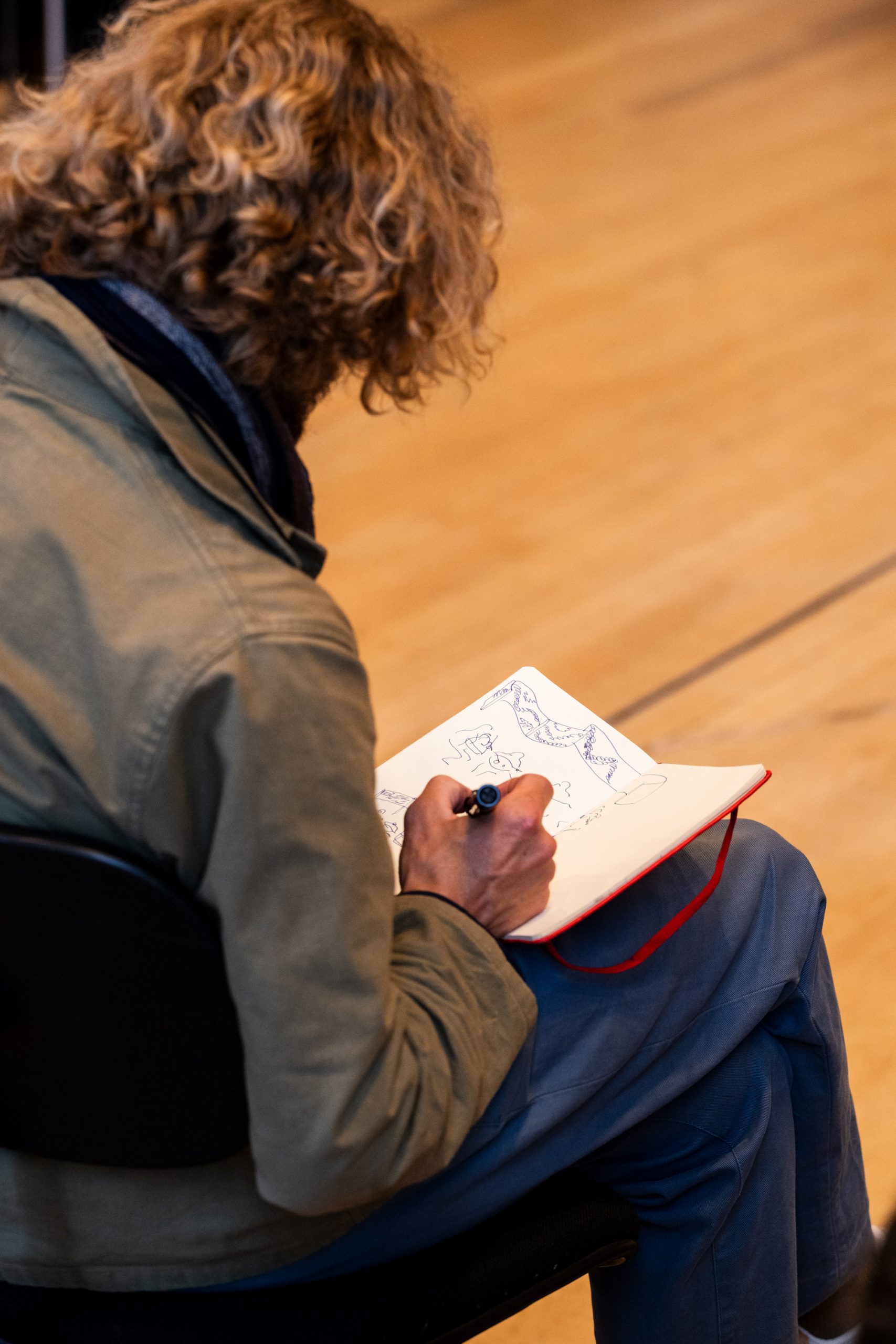
Yann Bagot © Alain Delorme
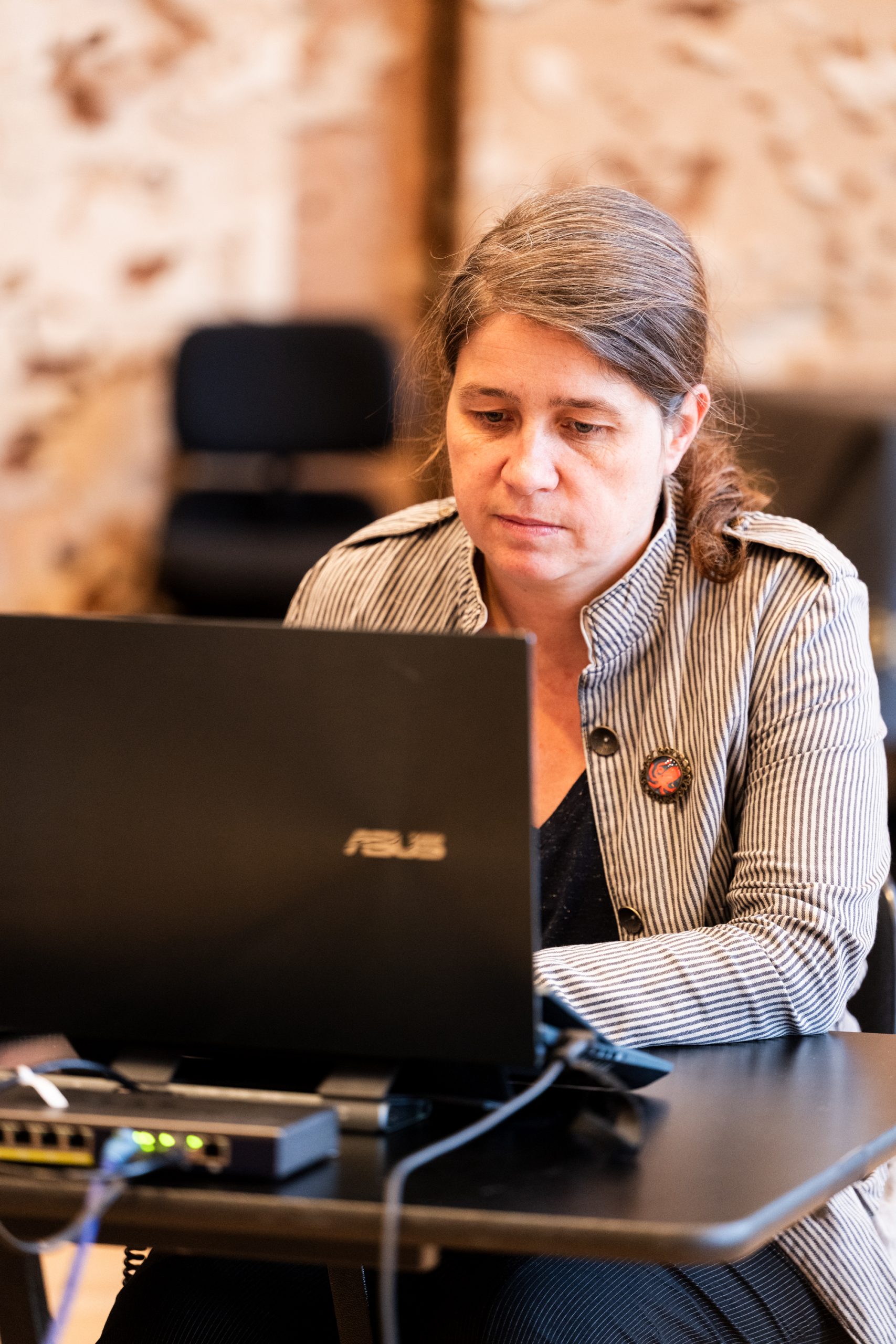
Céline Grangey © Alain Delorme
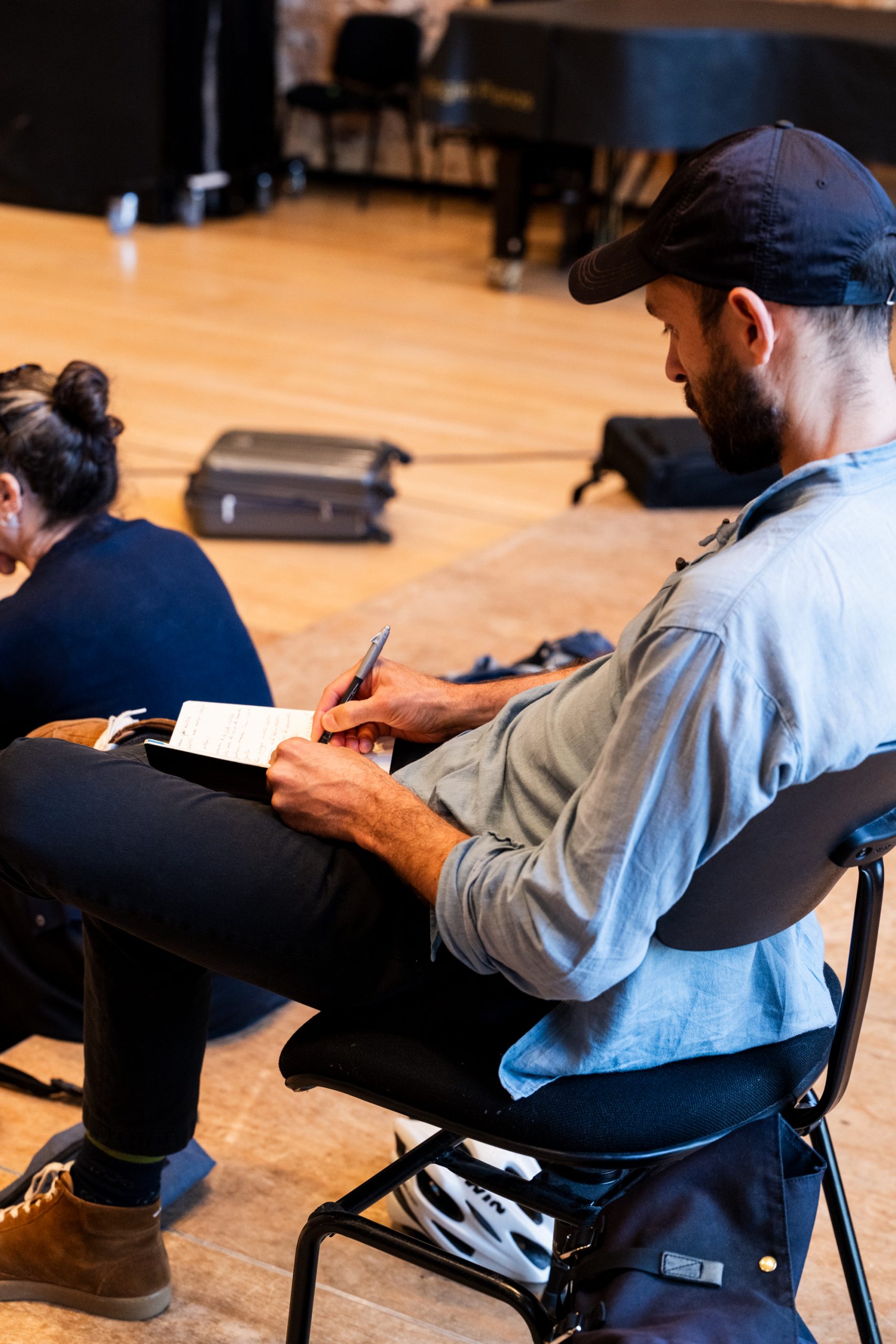
Damien Delorme © Alain Delorme
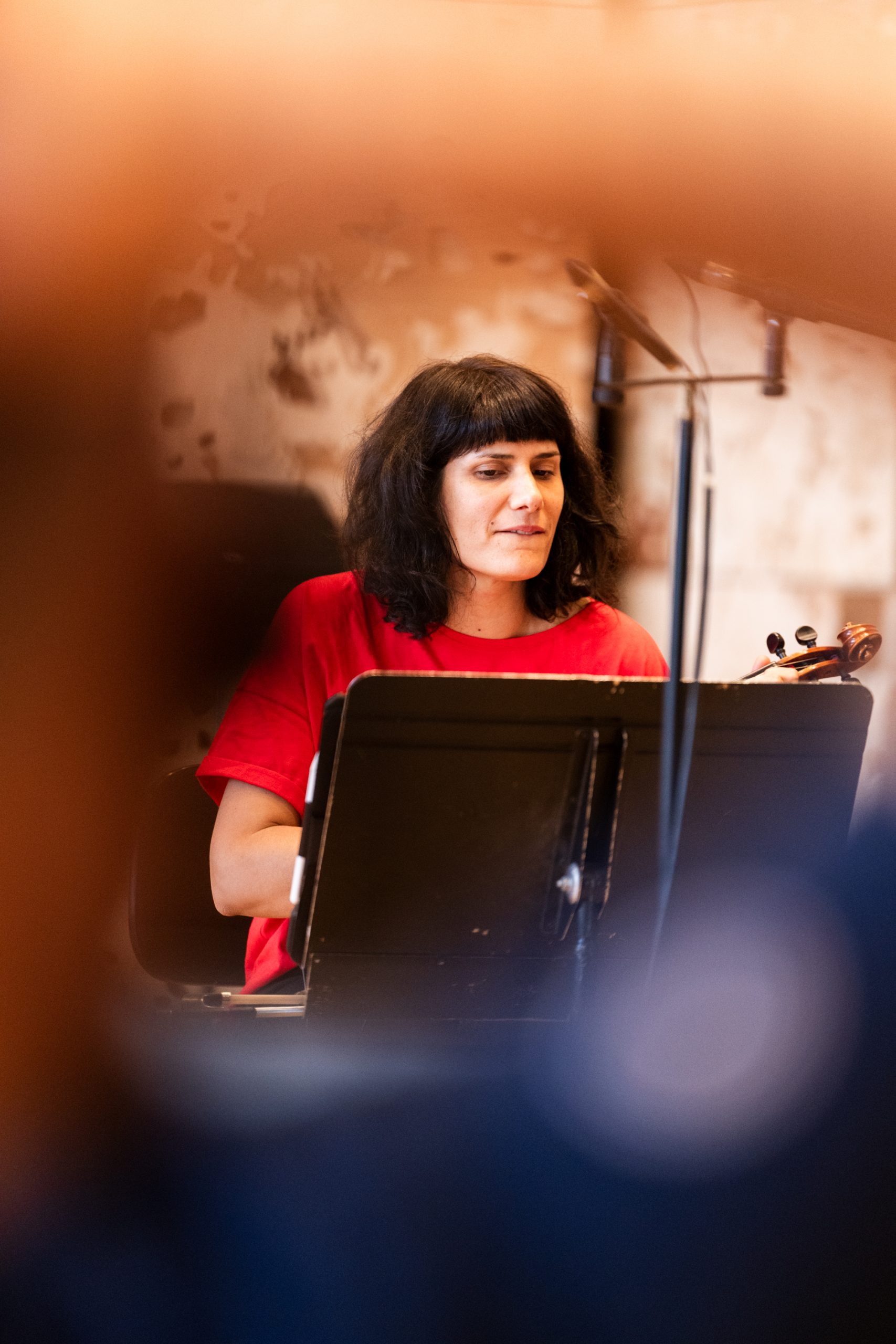
Séverine Morfin © Alain Delorme
At the centre of this constellation of personalities, backgrounds and disciplines is Séverine Morfin herself, of course, who is realising a ‘transdisciplinary dream’ here. While exploring the dialogue between art and science to inform the final work, the aim is also to advance each field.
In the face of the climate crisis, how can composers and musicians be of service? By creating a channel of sensory wonder in the face of living things to activate the will to care for them, because, as all climate activists know, rationality is not enough.
As sound specialists, we can also serve biology by making species that we cannot see but that live alongside us audible. The spatialised recordings made at La Poudrerie will thus enable staff to closely monitor the evolution of life in the park in order to better preserve species, and ethologists to feed their research on biodiversity.
On an artistic level, Séverine Morfin, drawing on her collaboration with all these disciplines, is writing a repertoire in which natural and musical sounds become inseparably and organically linked. It is no longer possible to distinguish between them, as if to convey the interconnectedness of all living beings. In short, a sound choreme, a.k.a. the sound map of a space, in this case the Parc de la Poudrerie, but augmented by the subjectivities and sensibilities of each individual.
Elegant melodies, the importance of rhythm and even repetition, fluid roles depending on the piece (who plays the drums, who plays the bass, who is the soloist), the obvious dialogue between the musicians but also between the musicians and the soundtracks… Chorème’s music, which is reminiscent of the Morfin-Ziad duo in its sometimes hypnotic quality, balances depth and lightness, grounding and velocity. Thanks to spatialised diffusion through four distinct sources, the sounds fly and parade like birds. (It should be noted that Céline Grangey is assisted in the diffusion aspect by the aptly named Baptiste Mésange.)
Formally, everything is open: concert, concert-conference or workshop, listening session, visual and sound exhibition, stroll, cultural action… The project is variable in geometry, modular and adaptable to multiple formats, both indoors and outdoors. A protean polyphony.
With Chorème, it is almost as if we are witnessing the birth of a living organism, a sound animal. An entity that has a life of its own, that breathes. A beating heart.
Raphaëlle Tchamitchian
in partnership with the Ensemble Contemporain, the Parc de la Poudrerie and the Théâtre de Vanves
DÉCOUVRIR D’AUTRES PROJETS
Mad Maple
IO 467