
Morfin & Ziad
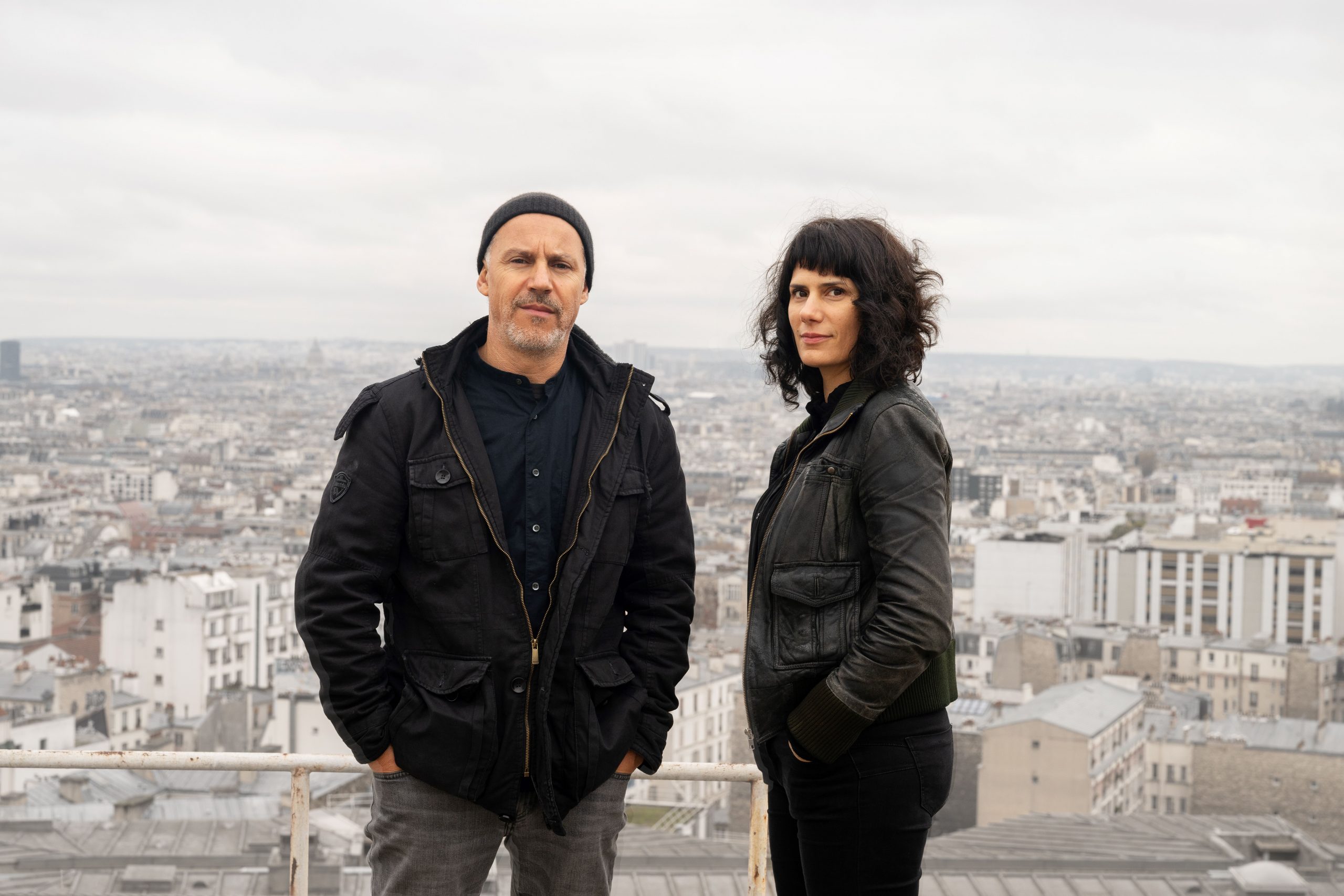
Photo © Félicien Delorme
Séverine Morfin – viola, effects, compositions
Malik Ziad – mandola, guembri, banjo, compositions
Séverine Morfin is a violist with a background in classical music who works at the intersection of contemporary, jazz and creative music. Malik Ziad plays the guembri, mandol, oud and banjo, and has spent most of his career playing traditional music from the Maghreb, particularly Gnawa and Chaâbi. They met – or, as they say, ‘discovered’ each other – in 2021, during a tour with Piers Faccini, a guitarist and songwriter whose folk songs are open to the world. From this unexpected spark, the Morfin-Ziad duo was born.
The fabulous violist Séverine Morfin is involved in a new project, a duo with Algerian mandolin and guembri player Malik Ziad. This music heals the soul and the dialogue between the strings is magnetic: it is not a sidestep, it is a fusion. There is a genuine desire to share in this music, which does a world of good in this world.
Located at the meeting point of their two worlds, the Morfin-Ziad duo is first and foremost a matter of encounter and curiosity. Drawing on their own toolboxes, each takes a step towards the other to create something unprecedented, something they can only do together. Malik Ziad indulges in improvisation, a practice that is virtually non-existent in the music he is used to; Séverine Morfin composes for the guembri as if it were a double bass… Their respective instruments are alienated, pushed to their limits, taken to the edge of their possibilities.
No category really fits them, but if we had to describe their music, we would talk about trance; tense, hypnotic rhythms; crescendos; graceful, poignant melodies; subtle combinations of timbres… What is certain is that when these two take the stage, everything else stops. Time suddenly stands still, the silence thickens. There are only two of them, their instruments are acoustic, they are naked, exposed, fragile. Yet their sound is powerful, deep, haunting. Resonating with a particular force and intensity. As if an entire orchestra were playing.
concerts
-
08 09 2024 / Jazz à La Villette, Paris
-
27 03 2025 / 1ère partie Macha Gharibian, Café de la danse, Paris
-
28 03 2025 / 1ère partie Macha Gharibian, Café de la danse, Paris
-
06 04 2025 / Détour de Babel
-
15 10 2025 / Studio de l'Ermitage, Paris
-
26 10 2025 / Abbaye de Royaumont
-
11 11 2025 / D'jazz à Nevers
-
17 11 2025 / EAC concert
-
18 11 2025 / EAC concert EHPAD
-
13 03 2026 / Festival le Temps d'une lune, Lille
-
10 07 2026 / Jazz à la petite France, Strasbourg
-
25 07 2026 / Honfleur, France
Resonance
The term suits them well.
Firstly, resonance of the venues. Their album was recorded at Royaumont Abbey, where they were in residence. Before that, the repertoire had been created in a 13th-century chapel at the Jazzèbre festival. ‘A magical concert!’ they recall. It’s hard not to take them at their word, given how well these two know how to capture the energy of the walls listening to them.
Then there is the resonance of the instruments. Viola, guembri, mandol: all strings vibrating in unison. The repertoire, which is very physical and even virtuosic, was written half by one and half by the other. Throughout the tracks, they take turns sweeping across the entire spectrum of the arrangement: bass, chords, counterpoint, melody, chorus, vocals, percussion… The viola ranges from double bass to violin… They transform themselves, take on each other’s roles, passing the baton in a polyphonic dialogue.
The voices also resonate: Malik Ziad sings ‘Parole de sage’, a poem by Abderrahman El Mejdoub dating from the 16th century. We also hear texts by him. ‘Roquia’ describes an “exorcism” session in Arabic — more or less the equivalent of a therapy session in the West but with an added spiritual dimension — while ‘Rituel’ recounts a funeral conducted according to Maghreb rites from the point of view of the deceased.
Finally, the resonance of time. When they play, they each enter, in their own way, into a state of altered consciousness. So much so that, despite their differences, they have naturally developed a common language. The instruments become extensions of their bodies; they are traversed and spoken by sound. A thousand voices sing through them, as if they had become the vectors of invisible, immemorial presences. As if the inexpressible nature of the world took shape in them, and in us who listen to them, through the infinite vibrations that pierce us. In these moments, music becomes a form of trance, a path to healing the soul. It transforms what we carry within us into beauty.
DISCOVER MORE CREATIONS
Mad maple